Posts

The Importance of Closure

Image
Do you have a task list that never seems to be complete? Or several DIY jobs that are left neglected? Or alternatively; did you stop getting certain social invites without a warning? Have you had a break-up that you struggled to process? Did you have someone drop out of your life and you’re not really sure why? All of these are examples of situations or tasks the conscious (and subconscious) mind would deem incomplete. In order to understand the importance of closure to the mind we need to take a trip back in time to the 1920’s. At this time the Gestalt psychologist Kurt Lewin made a discovery about the behaviour of waiters. If a tab was open and was to be bill paid then the waiter would have a good recall of the transaction. However once the bill had been settled and the customer left, when the waiter was asked to recall the transaction they had much less success. Lewin’s take on this was, ‘As long as the transaction was incomplete, it lacked closure and generated tension, mai...
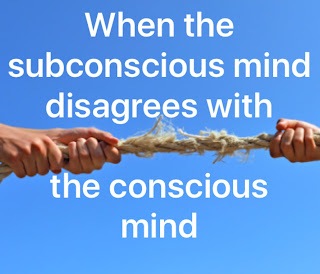
Subconscious Sabotage: Explaining the mental tug of war

Image
I read a quote about subconscious sabotage by Bo Bennett recently which said, “Self-sabotage is like a mental game of tug of war. It is the conscious mind versus the subconscious mind where the subconscious mind always wins.” This sounds a little depressing! So I thought I would write a post to describe why the subconscious mind would think it was a good idea try to ‘sabotage’ our conscious will. Our internal subconscious world view is built up from birth (or even before according to some). The primary ‘patterning’ period for the psyche is between the ages of 0-5.  By 9 years old our psyche will be completely patterned for the rest of our life. In childhood the psyche has the potential to develop positive patterning which will help in life. For example if we have a really tenacious parent who believed in thinking outside the box to resolve problems then the young mind can be patterned in to the belief that obstacles have solutions and can be overcome. So how do...

What in the Wellbeing?

Image
O riginally I had planned to write a blog post covering the subject of well-being but when I started planning it out I realised it was such a rich subject area that this may need to be a series of posts! This first post however aims to take a general look at well-being  and how we can help ourselves   recognise what obstacles we, albeit unintentionally, may put in its way. As a concept or buzz-word ‘Well-being’ has become more popular and pervasive today than ever.  Some universities offer well-being weeks to new students 1 , some housing associations are making plans to help improve their resident’s  well-being 2 and even mobile apps claim to be able to strengthen your well-being  3 . The Japanese government has started to use indicators such as Gross National Happiness alongside the tradition GDP to show the value they are putting on their resident’s happiness 4 .   Personally I have myself previously enjoyed working with a learning ...